
 College Bound?
Cut fast, rebuild smarter. Right before launch, our entire tech team missed the mark, badly. Timelines slipped. Accountability vanished. I had a choice: patch it, spin it, or pull the plug. I let the whole team go. It was one of the hardest calls I’ve ever made, but also the clearest. I rebuilt fast. Got a new team. Reworked the plan. Relaunched 3 months later with a better product and a real foundation.
What does it take to build and lead a successful brand as a woman? What strategies have worked? What lessons were learned the hard way? What are the most important elements that drive brand success — and how do women navigate leadership in this space? In this interview series we are talking to women who have played a major role in building, shaping, or leading a brand, to share their insights and stories. As a part of this series, I had the pleasure of interviewing Karen Watts.
Karen is a 23-time mover, a systems-obsessed real estate strategist, and a SaaS veteran with a background as a CFO, multiple-time founder, and platform builder. She raised $13.6M for her first startup, has led over 26 property transactions, and brings a uniquely pragmatic lens to brand leadership: one rooted in lived experience, execution over ego, and solving real problems instead of chasing trends.
Now, she is the Founder and CEO of DomiSource, a centralized home management platform built to solve the chaos of moving — connecting new residents with trusted local service providers and automating key tasks like utility setup, verified bookings, and home data tracking through a scalable system that brings order to one of life’s most stressful events, while paving the way for every property to have its own Carfax-style report.
Thank you so much for doing this with us! Before we dig in, our readers would like to get to know you a bit more. Can you tell us a bit about your “backstory”? What led you to this particular career path?
Ididn’t grow up dreaming of reinventing home management. I bought my first house at 19 because I didn’t want to waste money on a dorm room. That decision kicked off a 23-move journey across five states, 26 property transactions, 14 remodels, and more spreadsheet tabs than I care to admit.
Professionally, I started in finance, became a CFO in my 20s, built Corefino — the first SaaS platform focused on automating financial compliance — and spoke at over 60 tech conferences.
I’ve always been drawn to building systems that make complex things simpler. And yet, every time I moved, I kept running into the same logistical black holes: no central record of what’s been done to the home, no easy way to set up basic services, no trusted playbook. Your trash pickup day is a mystery. Your service providers are a gamble. And no one, including the homeowner, knows what’s behind the walls.
Eventually, I stopped waiting for someone else to fix it. DomiSource was built from that breaking point — to give people real control during a move, and to lay the groundwork for something every property should come with: a Carfax-style report that tells the truth about the home you’re living in.
Can you share the most interesting story that happened to you since you began your career?
There’s a long list of interesting — I’ve survived carbon monoxide poisoning, SARS, a brain tumor, and a drill to the arm. But if we’re talking professionally? Suing my own VCs probably tops it.
I built my first SaaS company, Corefino, when that term wasn’t even cool yet. We were doing real work: automating financial compliance before most startups realized you couldn’t fake your way through audits. We scaled quickly, and started attracting attention. But somewhere along the way, the investor boardroom dynamics started shifting. Vision misalignment is a sanitized way to say it. I saw where things were headed, and it wasn’t good for the company or the people we hired.
So I made the call no one recommends: I sued my own investors and took back the company.
Everyone told me not to. Too risky. Too expensive. “You’ll never work in this town again” kind of energy. But I did it anyway. Because I didn’t build a company to be sidelined in my own vision. And frankly, I don’t scare easy.
That experience taught me how often women founders are expected to just “be grateful” for funding instead of owning the strategy. That moment rewired something in me. I don’t lead to please. And I don’t hand over the blueprint unless someone else is willing to get their hands dirty too.
None of us are able to achieve success without some help along the way. Is there a particular person who you are grateful towards who helped get you to where you are? Can you share a story about that?
I don’t throw around the word “mentor” lightly, but Judith earned it.
I met Judith through an analyst while I was in the weeds with my first company. She was sharp, surgical, and didn’t let me get away with lazy thinking. Most people will nod and smile through your pitch. Judith will stop you mid-sentence and say, “That doesn’t make sense. Fix it.”
She didn’t just shape our go-to-market strategy — she shaped how I think as a founder. She asked the hard questions. She pointed out the blind spots. And somewhere in the middle of all that tough love, she became Aunt Judith to my adopted girls.
Judith taught me that challenge is a form of commitment. If someone’s willing to disagree with you for your own good, keep them close.
Is there a particular book that made a significant impact on you? Can you share a story or explain why it resonated with you so much?
I’ve read a lot of books that helped me become a better operator, and one quote from Robin Sharma really captures the spirit of The Monk Who Sold His Ferrari. It goes like this: “Investing in yourself is the best investment you’ll ever make.”
I’ve bootstrapped, fundraised, fired teams, rebuilt companies, and moved across the country more times than I can count. And the one throughline? If I invested in getting better, it paid off. Always.
That’s what inspired a post I shared recently, 5 things I’ve learned about building your dream:
- Pursue your passion.
- Focus on your strength.
- Find a mentor.
- Find joy in boredom.
- Believe in yourself.
Each of those is an act of self-investment. No one else is going to do it for you. Confidence is teachable. Skills are trainable. But you have to go first. You have to bet on yourself, even when you’re tired, even when you’re not sure it’s working. That kind of investment reshapes not just your career, but your capacity.
Ok, thank you for that. Let’s now jump to the primary focus of our interview. What unique challenges have you faced as a woman leading a brand, and how did you overcome them?
I’ve been the only woman in the room more times than I can count. I’ve been mistaken for the assistant while leading acquisition negotiations. I’ve chosen VC firms based on whether they’d ever funded a female founder. Entrepreneurship is hard enough without playing stereotype whack-a-mole on top of it.
One of the biggest challenges hasn’t just been the obvious stuff — the raised eyebrows, the underestimation — it’s been managing the invisible tax. The constant calculation: Should I be more direct or will I be called difficult? Should I soften this or will I seem unsure?
For me, the turning point was accepting that I wasn’t going to fit the mold, and that was a good thing. I stopped trying to adjust my leadership style to make other people more comfortable. I leaned into the fact that I’m a systems thinker who builds from lived experience. I built Corefino with that mindset. I built DomiSource with that mindset. And I mentor other women the same way.
Do you see your identity as a woman influencing how you lead, make decisions, or connect with audiences?
Absolutely, but not in the way people usually expect.
I don’t lead because I’m a woman. I lead the way I do because of what I’ve lived through. And yes, part of that is being a woman who’s bootstrapped, fundraised, fired teams, and survived seven near-death experiences. That gives you a filter. It sharpens your decision-making.
I’m hyper-aware of emotional undercurrents in a room — who’s not speaking up, who’s overcompensating, where the friction really is. That’s probably part gender, part survival instinct. I don’t bulldoze over tension. I surface it and build a system around it. When it comes to connecting with audiences, I think people, especially women, can smell the difference between a polished brand and a lived brand. DomiSource didn’t come from a case study. It came from hauling boxes, drilling my own patio, and figuring out how to transfer utilities at 2am.
So yes, my identity influences how I lead, but it’s not a performative layer I put on top. It’s embedded in the DNA of how I operate.
How is AI transforming the way your brand engages customers and drives sales?
AI is transforming how we operate, but not by replacing the human side of what we do.
Moving is already overwhelming. You’re dealing with logistics, utilities, providers, permits — things that don’t talk to each other, but all hit at once. AI lets us anticipate where people are likely to get stuck. For example, we’re working toward functionality that can surface task reminders based on zip code-level patterns — like a shift in trash pickup days or a missed utility setup window.
Internally, AI helps us sort through incoming customer data, flag what matters, and cut down on redundant follow-ups. But none of it works without clean data and a solid operational foundation. You can’t patch dysfunction with a chatbot.
And from a leadership standpoint, I think a lot about how AI is shaping human behavior. I posted recently about how little we prepare kids for a world where not everything they see is real. AI’s not just changing how we run businesses, it’s changing how we trust, learn, and make decisions.
So yes, it’s changing the way we engage customers. But for me, the bar is simple: does it actually solve something? Does it reduce the chaos or just repackage it? That’s the lens we use at DomiSource.
With ad fatigue and privacy restrictions impacting targeting, how are you adapting your marketing and media mix?
Honestly, we’ve never relied heavily on paid ads. Part of that is philosophical, part of it is practical. When you’re building something people haven’t seen before — a category that doesn’t really exist yet — ads can’t explain it. Education can.
At DomiSource, we’re focused on building partnerships and showing up in the places where real decisions get made: agent relationships, local service networks, trusted moving guides. We’ve shifted more toward owned and earned channels — founder-led storytelling, PR, long-form interviews, and content that reflects real customer pain points. We’re trying to be valuable. That means showing up in the right context with the right message — whether that’s a podcast, a LinkedIn thread, or a quote that actually says something useful.
Looking ahead, what’s the most underrated or overlooked strategy for brand growth that more leaders should focus on?
Get closer to the moment of actual need. Most brands spend too much time shouting from a distance — posting, retargeting, promoting — and not spending time on being there at the moment the problem really starts. For us at DomiSource, real growth is in getting there at that critical inflection point: when someone closes on a house, and now has 74 things to figure out, and 3 days to finish it. That is the moment.
Regardless of your industry, there is always going to be a moment when your customer feels overwhelmed, or underserved. That’s where you want to be.
What advice would you give to brand leaders looking to future-proof their growth strategies in the digital age?
Anything that is automatable, should be automated! But that doesn’t mean chasing every shiny new tool or plugging in AI just to say you did.
There’s a lot of pressure to chase shiny tactics — viral posts, influencer collabs, AI plugins. But the real future-proofing happens under the hood. Do you have good data? Is your onboarding process tight? Can you actually deliver what you promise without heroics?
From my experience building DomiSource, most growth problems are operational problems. We are using AI to amplify what’s already working, not fix what’s currently broken. That’s future-proofing. Get your back-end right, then scale what’s real. If you can’t repeat what works, you can’t grow. If it only works when someone is running a sprint, it doesn’t actually work.
Ok super. Here is the main question of our interview. Can you please share “5 Things You Need to Lead a Highly Successful Brand”? If you can, please share an example or story for each.
1. Cut fast, rebuild smarter.
Right before launch, our entire tech team missed the mark, badly. Timelines slipped. Accountability vanished. I had a choice: patch it, spin it, or pull the plug. I let the whole team go. It was one of the hardest calls I’ve ever made, but also the clearest. I rebuilt fast. Got a new team. Reworked the plan. Relaunched 3 months later with a better product and a real foundation.
2. “No” just means more paperwork.
In Santa Cruz, I bought a tiny one-bed, one-bath on a big lot. Everyone said expanding it was impossible. Flat-out no. Not in this zip code. Not with those set-backs. Not in this lifetime. But I don’t do ‘no’ very well. I rewrote plans, made phone calls, met with everyone from the city planner to the neighbor’s cat. It took months, but I got the permit. If the system doesn’t make sense, rebuild it
3. Invest in yourself — early, often, unapologetically.
I bought my first house at 19 instead of paying for a dorm. Every job I took, every company I built, was about stacking real-life experience I could use. Founders spend so much time “networking” or chasing approval. I went inward. I learned what I was good at, and kept sharpening it. That’s the only investment that compounds no matter what the market’s doing.
4. Don’t just automate. Clean house first.
I’ve said this before: anything that can be automated, should be. But not until your house is in order. At DomiSource, we didn’t touch AI until our operations were rock solid. Clean data, tight onboarding, clear accountability. Only then did we use automation to amplify what was already working.
5. If the map doesn’t exist, make your own.
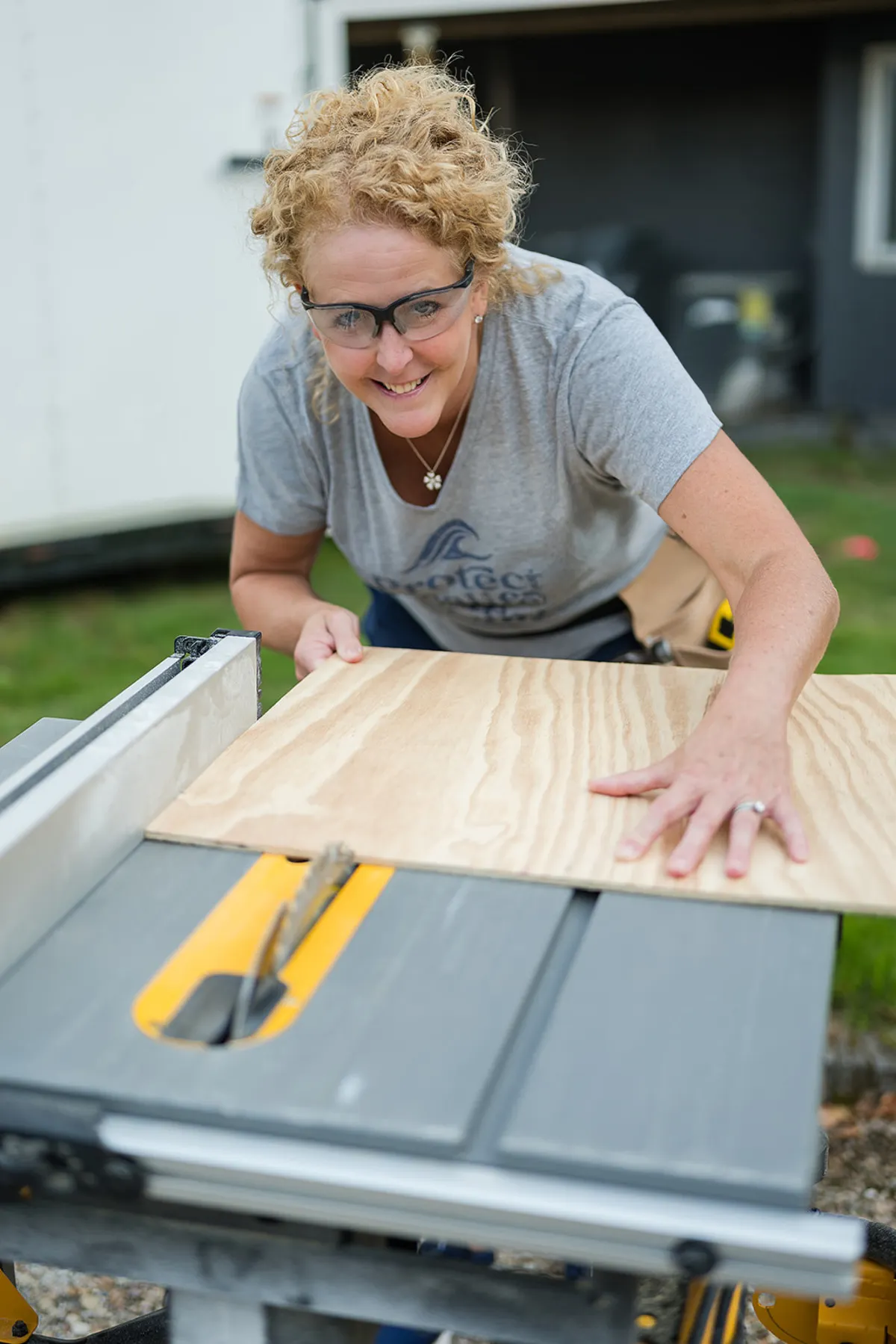
When I started DomiSource, there was no playbook for what we were doing — no category, no software model, no clean way to “benchmark.” I mapped every utility handoff myself. Talked to homeowners. Sat in the pain. That’s the job when you’re creating something new. You don’t follow the map. You become the cartographer.
As your brand has grown, what has become harder to manage and what have you had to let go of in order to grow?
Letting go of control was never my default setting. I built DomiSource from lived pain, so in the early days, I wanted eyes on everything.
But as the team grew, I realized I was the bottleneck. I had to let go of being the executor and fully step into the role of builder and protector of the vision. That meant hiring people who could think in systems, take ownership, and build with me, not for me. It’s still a muscle I work on daily. But if you want to grow, you can’t stay in the weeds. You have to get out of the way, without walking away.
How do you intentionally create space or opportunity for other women through your work?
I don’t believe in tokenism or waiting for permission. I believe in putting women in positions of real ownership, and that starts with how you hire, how you build, and how you make room at the table. At DomiSource, many of our early hires were women who had been underestimated in different roles. I wasn’t interested in perfect resumes. I was interested in pattern recognition, grit, and people who could think and perform under pressure.
I also share the full picture when I speak — fundraising wins, hiring mistakes, the near-burnouts — because I don’t think empowerment means painting over the hard parts. It means showing what’s possible and being honest about the cost. That’s how you create space — by leaving the ladder down, not pulling it up behind you.
You are a person of great influence. If you could inspire a movement that would bring the most amount of good for the greatest number of people, what would that be? You never know what your idea can trigger.
I’d normalize teaching systems thinking in real life — early, often, and practically. Not as a trend, but as a skillset.
We teach kids how to memorize facts, but not how to structure chaos. Not how to fix a broken process, or question the inefficiencies they inherit. I think most burnout, most broken businesses, most policy failures — they all come back to people trying to operate inside systems that make no sense.
If we taught more people how to rebuild the system instead of just survive inside it, we’d get better companies, better leadership, and a lot less regret.
We are very blessed that some very prominent names in Business, VC funding, Sports, and Entertainment read this column. Is there a person in the world, or in the US with whom you would love to have a private breakfast or lunch with, and why? He or she might just see this if we tag them.
I’d love to have a conversation with Barbara Corcoran. No cameras, just coffee and a straight-up talk.
There’s something about the way she built her business that feels refreshingly unfiltered. She didn’t have a VC fund behind her. No Silicon Valley pedigree. She started a real estate company in New York City with a $1,000 loan, and when her boyfriend told her she’d never succeed without him, she proved him wrong by building one of the most recognized brands in real estate.
We’re in different industries, but I think we share that stubborn clarity. I’d want to ask her how she stayed steady through the long stretches, those quiet in-between moments before the success story gets written. I’d want to know how she kept her footing while pushing through rejection, navigating bias, and doing the work no one else saw. I’d want to learn from that.
How can our readers further follow your work online?
You can follow my work on LinkedIn under “Karen Watts”. It’s where I share behind-the-scenes lessons from building DomiSource, thoughts on entrepreneurship, and the (often chaotic) reality of moving and homeownership.
And be sure to check out our freshly launched website at www.domisource.com If moving or remodeling ever made you say, “There’s got to be a smarter way to do this,” DomiSource agrees.
Thank you for these fantastic insights. We greatly appreciate the time you spent on this.
About The Interviewer: Cooper Harris is a California-based entrepreneur and the founder and CEO of Klickly, a data-driven, AI platform that powers distributed commerce. Emerging as a pivotal figure in the west coast tech scene, Cooper has won Los Angeles Business Journal “Innovator of the Year,” InformationAge’s Women in I.T. “Entrepreneur of the Year” was nominated for Google’s “Young Innovator” award, L’Oreal’s “Digital Woman of the Year,”and was named by Adobe as a “Top Data Thought-Leader” at Cannes, alongside execs at JP Morgan Chase and Burger King. Harris invented a data technology that leverages AI to facilitate distributed commerce on 25M online destinations. This significant innovation creates a huge efficiency in the market — the platform’s machine-learning identifies best-fit matches for commerce opportunities and uses sophisticated algorithms to understand the consumer to both promote and power transactions.
Cooper has been invited to speak on eCommerce, tech, data, and AI at international summits including the United Nations, CES, Cannes Lions, Money 20/20, SXSW, ShopTalk, Sundance, Los Angeles TechWeek, London Technology Conference, and Jason Calacanis’ LAUNCH Scale. Ms. Harris speaks on topics including data / FinTech / Retail Tech, fostering women in STEM, and disrupting the status quo using technology/innovation. Cooper also writes about eCommerce, innovation, data and AI, and using tech to change the world. She is a contributor to Forbes and HuffPost and has been featured in Inc., Fast-Company, Entrepreneur, Mashable, Women2.0 and more.